
Eat less flour. Really?

Since we started our new behavioural design company, Vessel Health Communication, people have been asking how we can help them choose better health habits. For example, some have asked if Vessel could help them to eat less flour; or exercise more; or not text and drive.
These are not unusual questions because in everyday life, even with big challenges, people just want to get things done quickly, simply, and without hassle. People want results immediately. Very few take time to appreciate the design of everyday things and the systems that make them work.
Say you're a passenger in a taxi going to Santa Cruz, the design or colour of the car is not the first thing you'll think about. You'll think about not getting squeezed; you'll want the car to be cool; and you'll want to reach Santa Cruz in one piece. Let's take that in stages. First - for you not to get squeezed, someone would have had to design comfortable seats, big enough, so that plus size passengers won’t affect you. Second - for the car to be cool inside, someone would have had to design AC vents that swivel 360 degrees. And third - for you to reach Santa Cruz safely, someone would have had to design good brakes, a good road, safe road signage and the right size tyres. But who thinks about these things when they're in a car going to Santa Cruz? Experts in Behavioural Design like the team at Vessel do, all the time — in cars, in hospitals with our parents, at the vet with our dogs, in the street with stressed out people, and everywhere else.

So lets come back to flour. Can Vessel help you to eat less flour? Generally to get people to do - or not do - things you'd use one or more of the following — 1. Restrictions; 2. Incentives; 3. Persuasion, or 4. Nudges or easy choices.
Here’s how these work. Say we put the challenge of helping people to eat less flour to a ministry team of policy makers that consists of a lawyer, an economist, a marketer and a behavioural designer, here is what each one will prescribe. The lawyer will say “ban flour” [restriction]; the economist will say “give them a trip for two to Tobago if they eat less flour” [incentives]; the marketer will say “put up posters and flyers of a bake with fangs and bulging eyes and this will frighten or persuade them not to eat flour” [persuasion]; and we — Behavioural Designers at Vessel — would say “we know how the flour environment makes people eat dozens of doughnuts; so we’ll redesign the environment to make it super easy for them to choose less flour, and still be quite happy” [nudge].

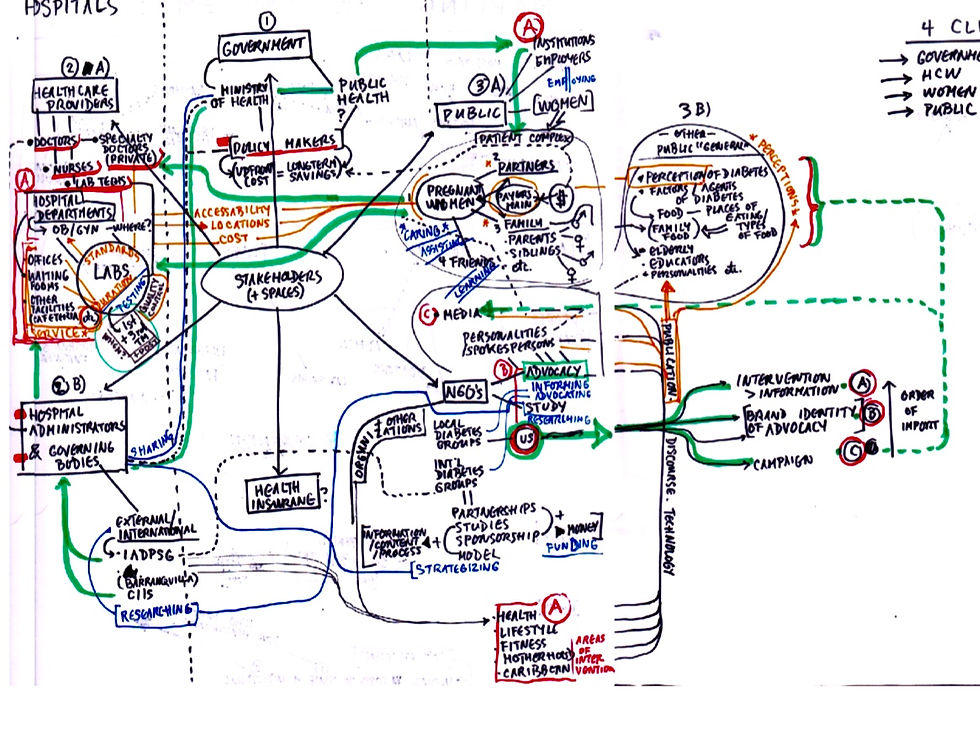
Here’s how we'd approach this flour problem. The first thing is we’d make a system map of the behaviour journey in the flour ecosystem and pinpoint the factors that make it easy to get and eat an unlimited supply of flour products. Then we would focus on making it easy and pleasurable to choose healthier options than flour products. And then we’d think about easy ways to get you to make these healthier choices your default so that it becomes your habit. Of course there is a lot more to it than how I say it here but this is the general approach.


Comments